| NEWSLETTER | #62 | 01/10/2026 |
|
 |
|
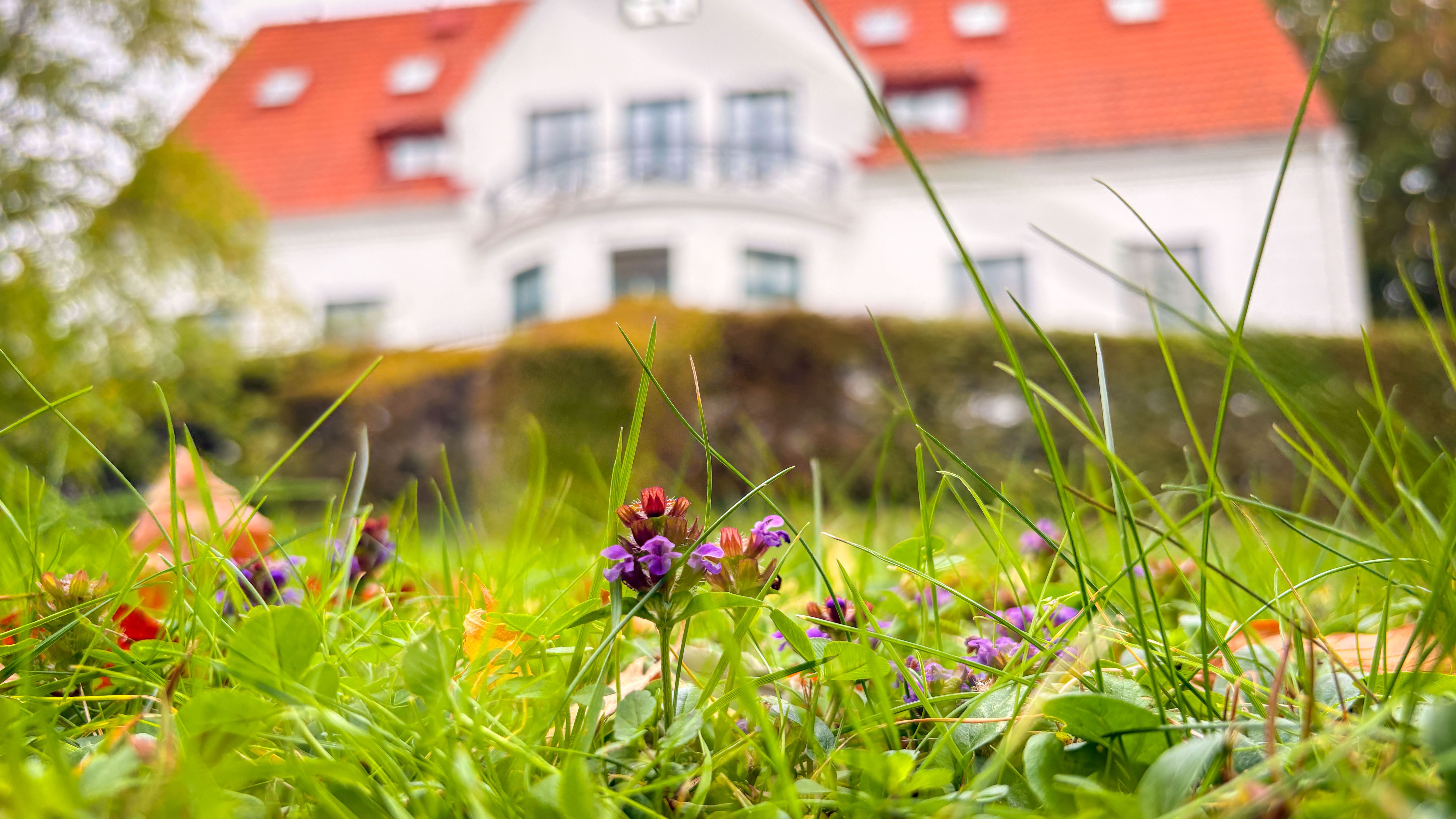 |
Perhaps the last clover flower still in bloom before autumn settles in. Photo: Linus Edlund.
|
It has been a real pleasure to see CMES coming to alive again after the summer. The autumn semester has started with a wonderful sense of energy, curiosity, and collegiality. I have particularly enjoyed seeing the Forsman Villa fill up again with many new researchers, students, and visitors, and hearing the many conversations that make CMES such a stimulating place to work.
We got off to a good start with our autumn kick-off in Båstad on 25–26 August. It was a valuable opportunity to look ahead, discuss our activities for the coming semester, and reflect together on important developments for CMES and MECW, including the forthcoming VR evaluation and the soon coming leadership change of CMES and our Strategic Research Area MECW (Middle East in the Contemporary World).
One of the highlights of the early autumn was our Open House in September. More than 50 people came to meet CMES researchers, learn about twelve ongoing research projects, and discover more about what we do. Seeing researchers presenting their work at the poster stands and talking directly with students and visitors was a wonderful reminder of what makes CMES special. We are not only a research centre; we are also a meeting place for people, perspectives, and ideas.
We have had an exceptionally strong interest in our Arabic language courses. A record number of applications this semester is a clear indication of the continuing interest among Lund University students and staff in developing their language skills and gaining a deeper understanding of the Arabic-speaking world.
Our research activities have been equally vibrant. In early September we celebrated the launch of Maria Småberg and Svante Lundgren’s new book on Scandinavian women’s humanitarian efforts during the Armenian Genocide. We have also had presentations of two new MECW-funded projects: Utopian Deserts, which investigates smart cities in the Gulf region, and the Elite Mobility project, which examines how investment migration in the Middle East is changing ideas of citizenship, belonging, and the role of the state.
Other interesting events have been a with Domkyrkoforum co-organized talk with Joakim Medin on “Munkavlar och motstånd: press- och yttrandefrihet i Mellanöstern”, with Lisa Strömbom as moderator. CMES also co-organised a Studentafton event featuring former Nobel Peace Prize laureate Shirin Ebadi, also moderated by Lisa Strömbom. Ebadi, a pioneering human rights lawyer and longstanding advocate for democracy, freedom, and women’s rights in Iran, discussed her lifelong struggle for freedom and human rights and the paths ahead for democracy in Iran.
An opportunity to look forward to is our call for writing retreats. This call will be opened on 15 October, with deadline on 20 November. We hope many of you will consider taking part and making use of the opportunity to step away from the everyday demands of academic life and dedicate some time to writing and reflection.
What we find particularly encouraging is the breadth of our activities. Researchers at CMES continue to engage with questions that are both academically important and highly relevant to contemporary society, from political change and conflict to migration, environmental transformation, renewable energy, and climate resilience.
And there is much more to come. Our continued autumn seminar programme brings together scholars from Lund and from universities and research institutions around the world. During the coming months, we will discuss issues ranging from bloc politics and geoeconomics in the Middle East to Palestine, democratic developments, Islamic aid, and climate resilience. We hope many of you will take the opportunity to join these conversations, meet colleagues, and contribute your own perspectives.
As Director, I am especially grateful to all our researchers, students, staff, and partners who contribute to this lively environment. A research centre is ultimately created by the people who work in it. The enthusiasm, openness, and collegiality we have experienced this autumn are therefore a great source of inspiration to all of us.
I look forward to the remainder of the semester, to more seminars and discussions, new encounters, and collaborations, and, hopefully, many opportunities for us to meet over a coffee in the Forsman Villa.
For the latest updates, stay connected through the CMES website, social media channels, and by subscribing to the newsletter.
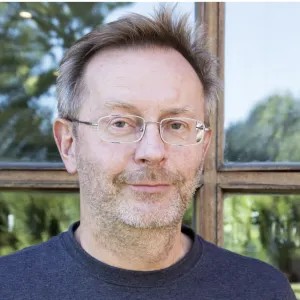
Ronny Berndtsson
CMES Director,
 |
|
|
| CMES researcher Hossein Hashemi and his colleagues from engineering, natural sciences, and social sciences, has been recognised as one of the standout studies published by researchers in Sweden. Their paper "Unraveling the link between agricultural patterns and dust storm occurrence in Mesopotamia", has been selected for a special collection celebrating high-impact research published in 2025 by IOPscience. |
|
|
|
| Anne Lene Stein has been awarded the EISA Best Dissertation Award 2026 for her thesis, “Agonism against the Odds: Epistemic Disruptions and Bodies of Dissent in Palestine and Israel”. |
|
|
|
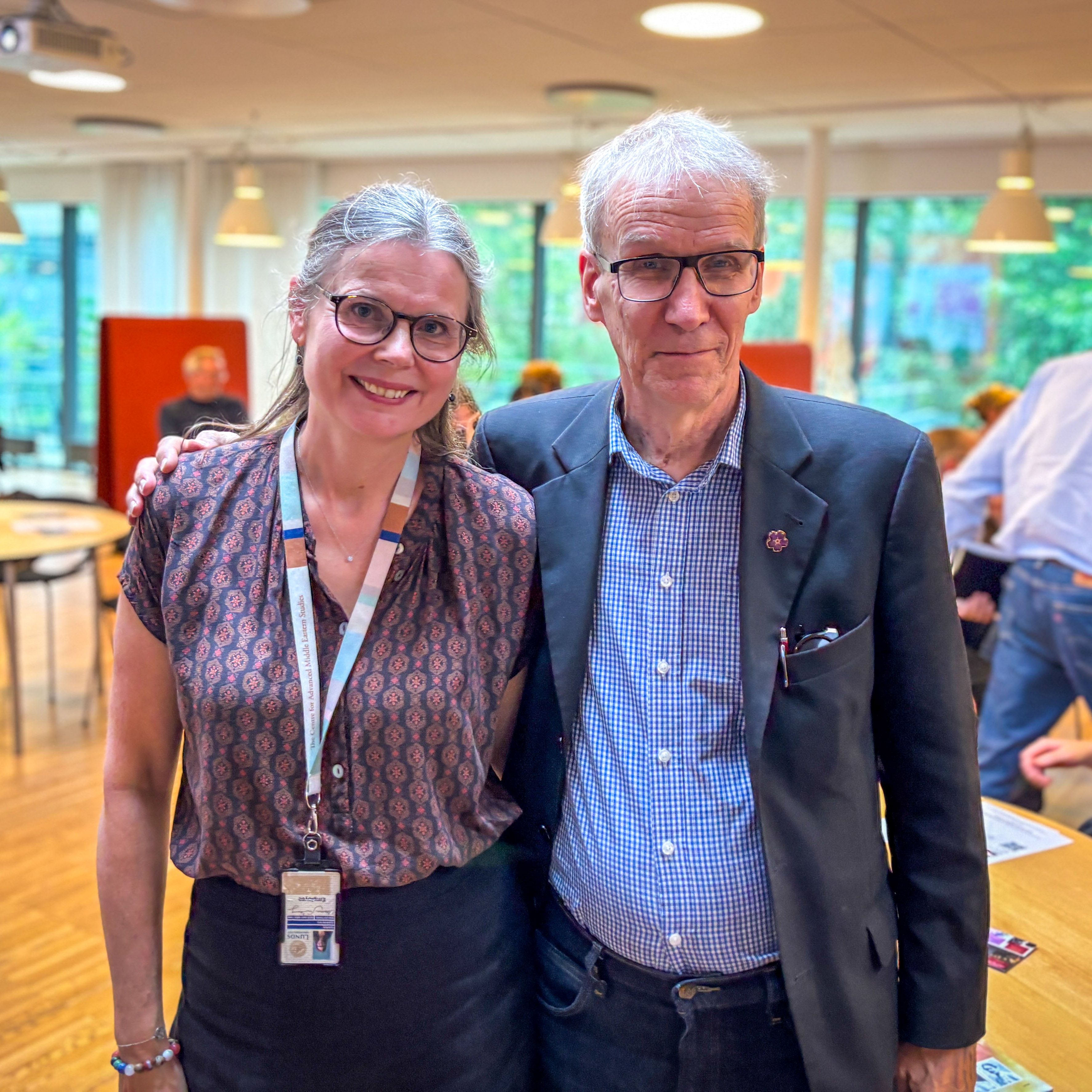 |
| Maria Småberg and Svante Lundgren. Photo: Linus Edlund |
| A Centre for Advanced Middle Eastern Studies (CMES) seminar on 8 September marked the launch of Three Scandinavian Missionary Women and the Armenian Genocide, a new book edited by Svante Lundgren and Maria Småberg that sheds light on the humanitarian work of three Scandinavian women who assisted Armenians during one of the twentieth century's most devastating atrocities. |
|
|
|
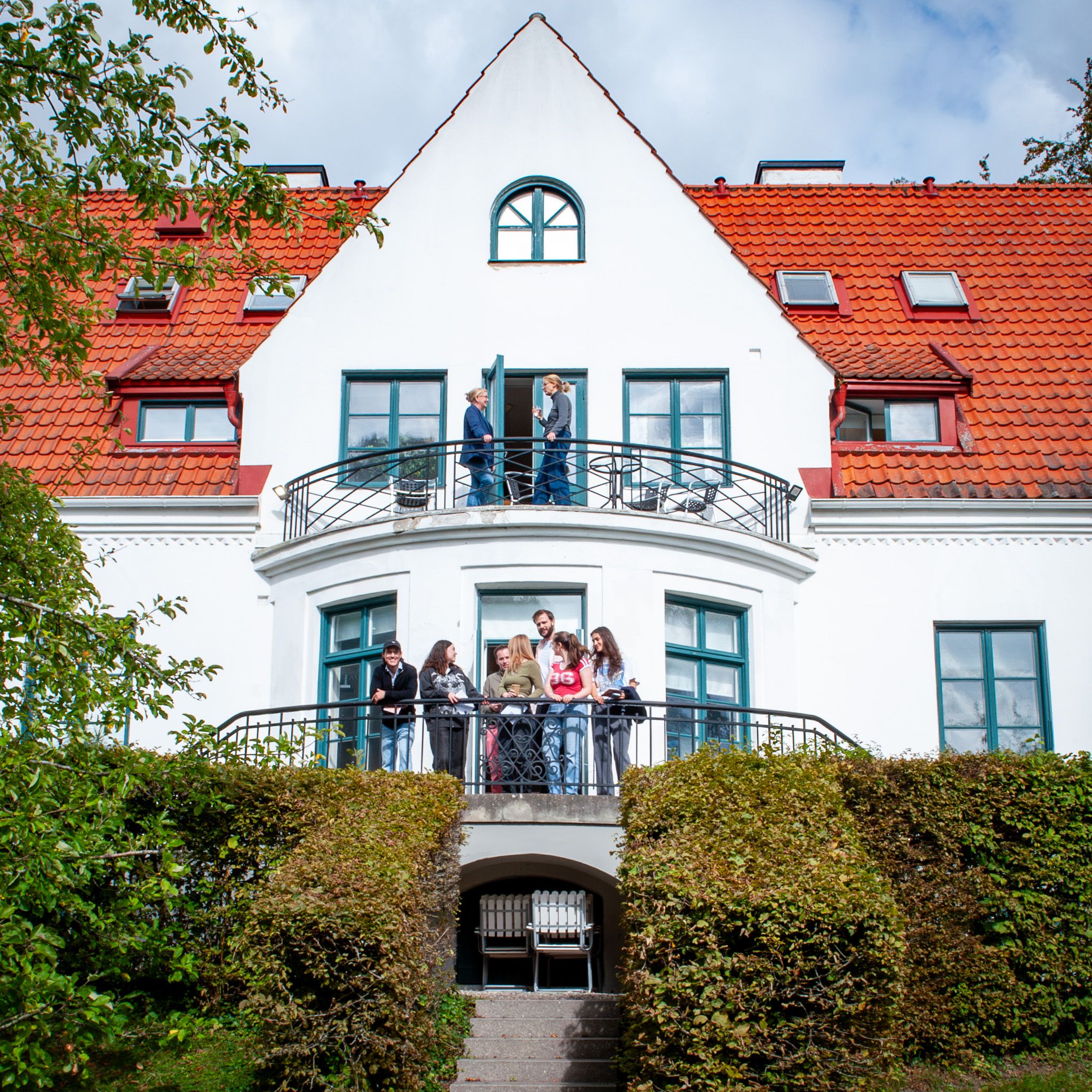 |
| CMES house, Finngatan 16, Lund. Photo: Linus Edlund |
| More than 50 people attended the CMES Open House on 14 September to meet the Centre’s affiliated researchers and learn about twelve current research projects. The programme featured presentations, conversations at the researchers’ poster stands and information about CMES courses in Arabic. |
|
|
|
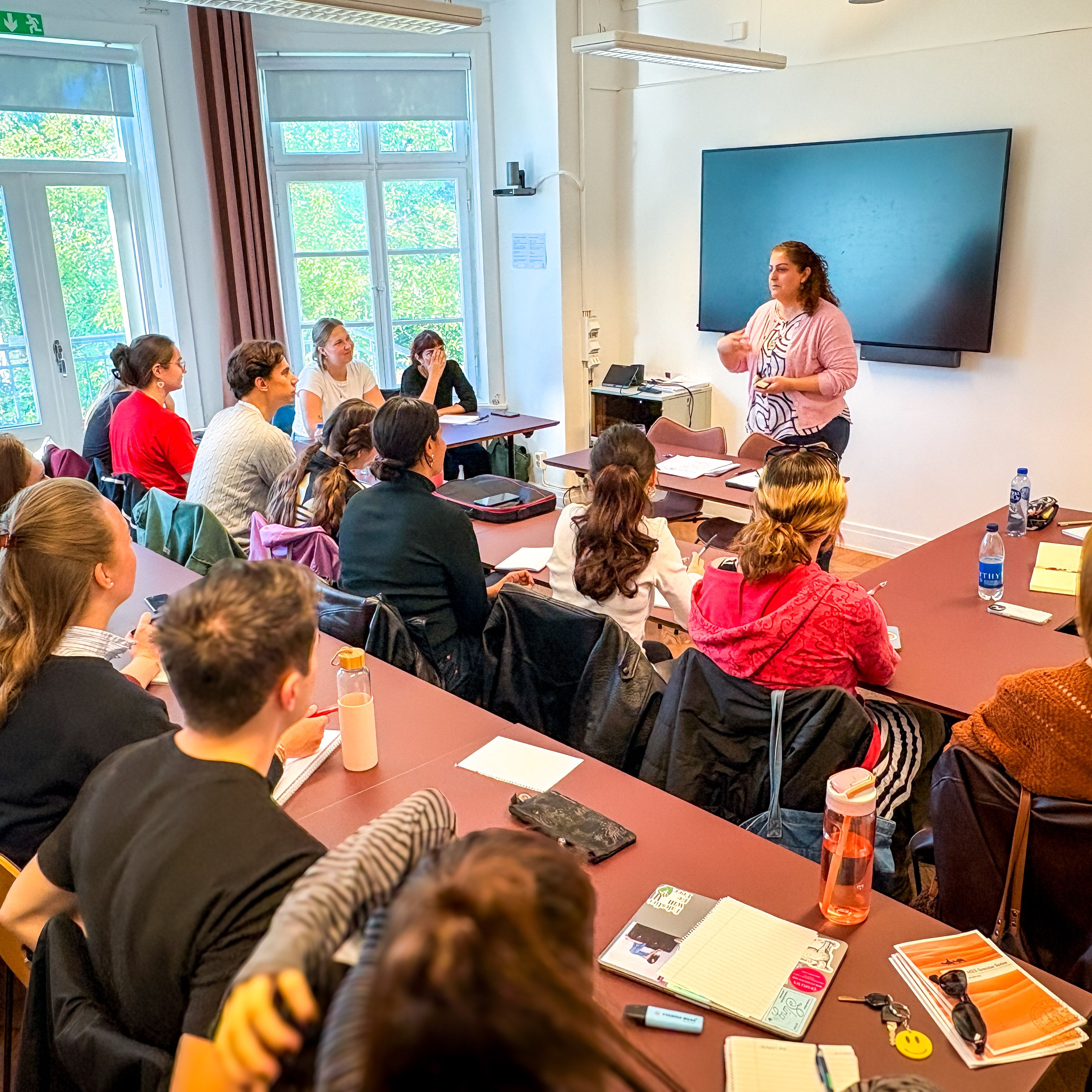 |
| Students attending the first Arabic language class of the semester. Photo: Linus Edlund |
| Interest in CMES Arabic language courses has reached a new high. This semester, the Centre received a record number of applications from Lund University students and staff seeking to develop their language skills and deepen their understanding of the Arabic-speaking world. |
|
|
|
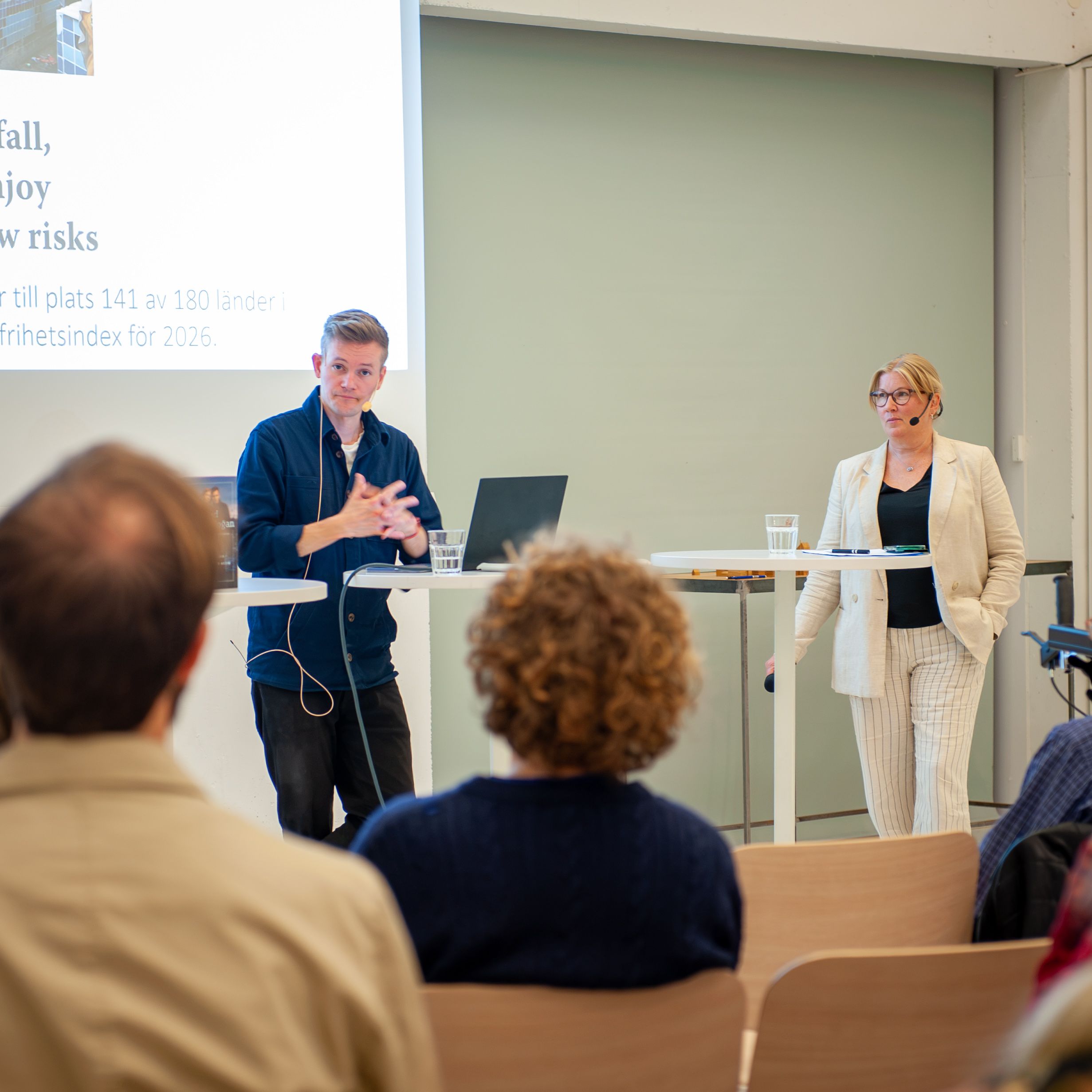 |
| Joakim Medin at Domkyrkoforum. Photo: Linus Edlund |
| Around 70 people gathered at Domkyrkoforum when journalist and author Joakim Medin visited the CMES to discuss press freedom and freedom of expression in the Middle East. Drawing on his recent experiences in Turkey and his new book Imprisoned by Erdoğan, Medin reflected on the risks facing journalists working under authoritarian rule. |
|
|
|
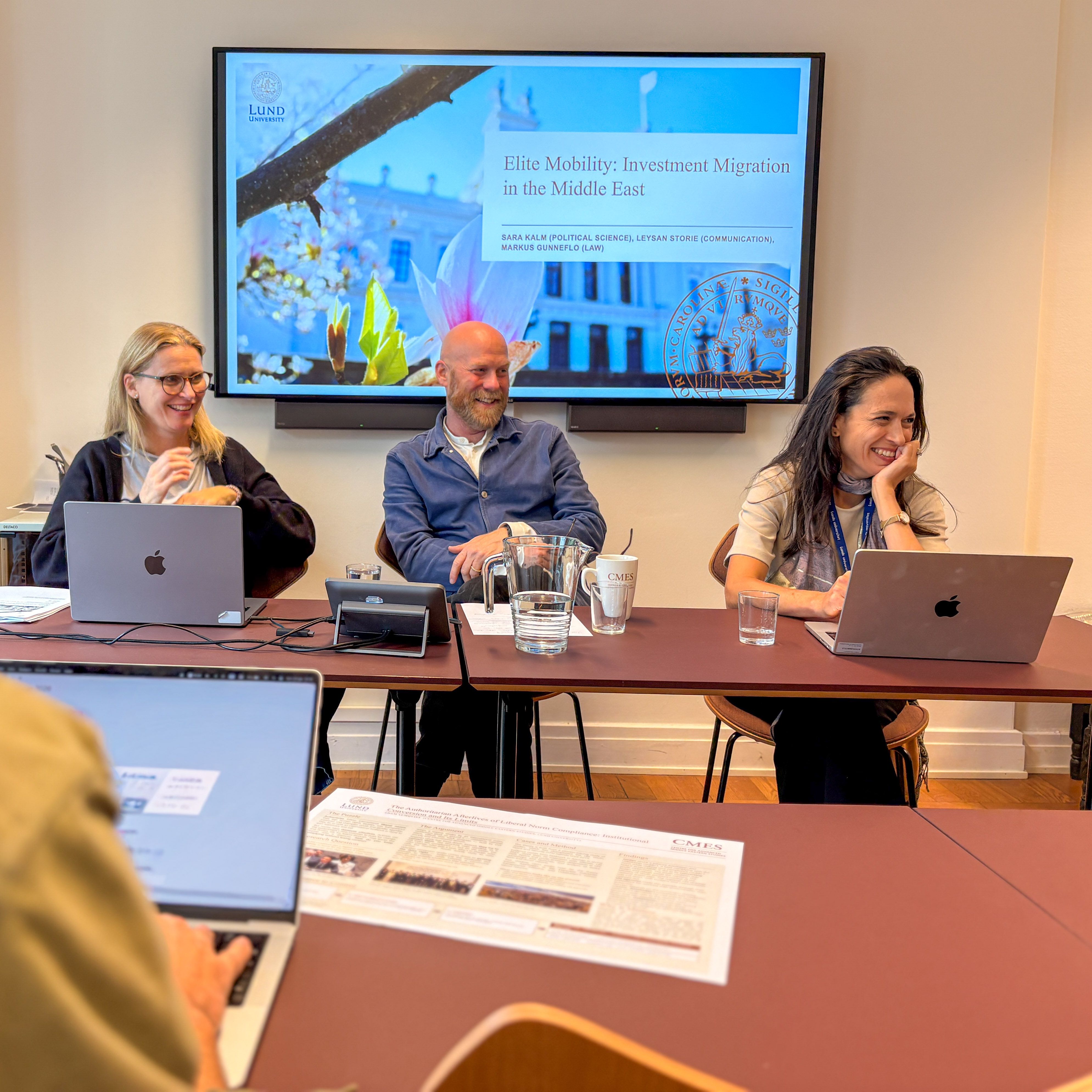 |
| Sara Kalm, Markus Gunneflo and Leysan Storie. Photo: Linus Edlund |
| How does the growing market for investment migration reshape citizenship, belonging and the role of the state? These questions were at the centre of a recent CMES seminar, where researchers Sara Kalm, Leysan Storie and Markus Gunneflo presented their new MECW-funded research project, Elite Mobility: Investment Migration in the Middle East. |
|
|
|
 |
| Utopian Desert: Investigating Smart Cities in the Gulf Region - Research Poster |
| What happens when the desert becomes a laboratory for the city of the future? A new MECW research project will critically examine how ambitious smart-city visions are imagined, promoted and translated into urban development across the Gulf region. |
|
|
|
| How is North Africa’s renewable energy transition reshaping local communities, landscapes, and power relations? Bringing together researchers from across disciplines and regions, an international workshop at Lund University explored the social, political, and environmental implications of large-scale renewable energy projects, with a particular focus on extractivism, environmental justice, and local contestations across North Africa. |
|
|
|
The New Middle East: Bloc Politics and Geoeconomics
Join us for a seminar with Fredrik Meiton, The Swedish Institute for Foreign Affairs (UI), this talk offers a tentative outline of a new governing logic in Middle East conflict, suggesting that it reveals something about the world order about to replace American unipolarity. |
|
|
|
Alternative Tourism and Political Narratives in Palestine
Join us for a seminar with visiting PhD candidate Neixé Castellano LLordella, University of Barcelona.
|
|
|
|
A Palestinian Armistice Plan: Charting a Rights-Based Transition for Palestinian-Israeli Peace
Join us for a exciting seminar with Zaha Hassan, Carnegie Endowment for International Peace, Cambridge Peace Initiative.
|
|
|
|
Democratic Backsliding in Israel and the Elusive Peace.
Join us for a exciting seminar with former CMES-director Karin Aggestam. |
|
|
|
Palestine’s Managed Precarity: EU Governance, the Denial of Democratic Agency, and the Foreclosure of Resilience
Join us for a exciting seminar with Scientific Advisory Board member Michelle Pace. |
|
|
|
New book - Islamic Aid and Gulf States in Contemporary Crises
Former CMES researcher Altea Pericoli, now a Marie Skłodowska-Curie Postdoctoral Fellow jointly affiliated with the Department of Near Eastern Studies at Princeton University, will present her new book, Islamic Aid and Gulf States in Contemporary Crises.
|
|
|
|
The Role of Local Urban Development Plans in Building Climate Resilience: A Case Study of Mashhad, Iran
Join us for a excitning seminar with Masoumeh Mirsafah
|
|
|
|
| How does armed conflict reshape landscapes? In a new study, CMES researchers Pinar Dinc and Purnendu Sardar (together with Milana Ayvazyan) examine how warfare, extractivism, and environmental degradation have transformed Kurdish-majority regions in Syria and Turkey. The open-access publication reveals how environmental destruction can become intertwined with strategies of territorial control, resource extraction, and governance. |
|
|
|
| CMES researchers Mo Hamza and Sinem Kavak have published a new article examining the relationship between social class and forced migrants’ onward mobility. Focusing on Syrian refugees in Turkey and Lebanon, the study highlights how class-based resources and constraints shape migration aspirations and opportunities. |
|
|
|
| The CMES Yearbooks summarize the Centre's activities during the year. |
|
|
|
| CMES Researchers are regularly interviewed in newspapers, radio, and podcasts on the situation in the Middle East. |
|
|
|
|
|
|
|